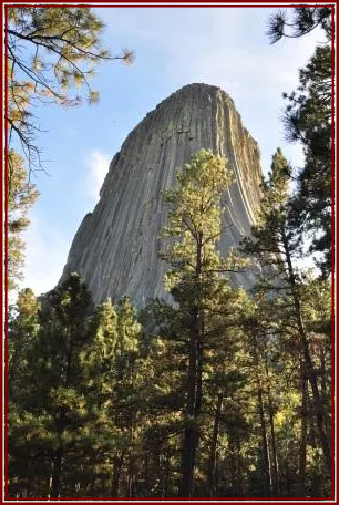
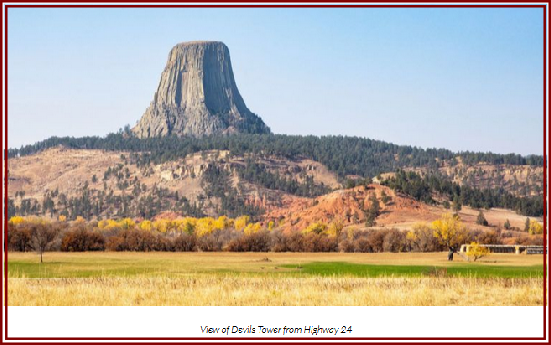
Fur trappers may have visited Devils Tower, but they left no written evidence of having done so. The first documented non-Indigenous visitors were members of Captain William F. Raynolds's 1859 expedition to Yellowstone. Sixteen years later, Colonel Richard I. Dodge escorted an Office of Indian Affairs scientific survey party to the massive rock formation and coined the name Devils Tower.[30] Recognizing its unique characteristics, the United States Congress designated the area a U.S. forest reserve in 1892 and in 1906 Devils Tower became the nation's first National monument.
How the Tower Formed
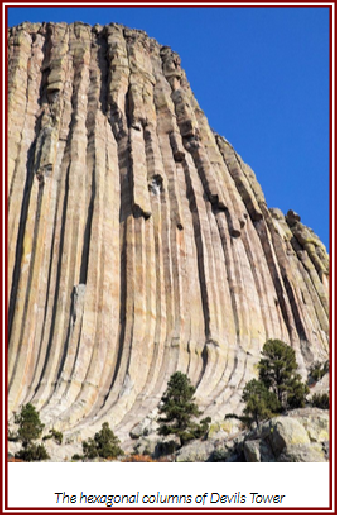
Devils Tower rises above the surrounding grassland and ponderosa pine forests like a rocky sentinel. Geologists have studied the formation since the late 1800s, and today still wonder how it formed. Although much of the Tower’s geologic story is agreed upon, theories differ on certain details. Protected in 1906 for its scientifc value, Devils Tower remains a place of scientifc study and public wonderment. We know that the Tower is formed of a rare igneous rock, phonolite porphyry, and is the largest example of columnar jointing in the world. To better understand processes which shaped the Tower, we look back through Earth's history to a time long before this unique feature took shape.